
Root Canal Therapy – Newton, MA
Choose Saving Your Tooth Over Extraction
Does drinking iced tea or hot coffee have you agonizing in pain? Maybe one of your teeth has simply been hurting constantly for a while now. In either case, it would seem you are dealing with an infection inside the dental pulp – the bundle of nerve endings located at the center of your tooth. Since this area is so sensitive, it can cause discomfort to the degree that it interferes with your daily life. Hope is not lost, however, because here at Newton Corner Dental Care we want you to choose saving your tooth over extraction to give you a reason to smile once again. Contact us so our dentists can get you back on track with root canal therapy in Newton!
Do I Need Root Canal Therapy?

The most common indication of the need for a root canal is a severe, persistent toothache. However, that is certainly not the only symptom to look for. Other signs you might need a root canal include:
- Extreme, prolonged sensitivity to hot or cold foods or beverages
- Sharp pain when biting down
- Dark discoloration of a tooth
- Swelling or redness of the gums surrounding a tooth
- A pimple-like bump on the gums near a tooth
As soon as you notice any of these symptoms, contact our team. We’ll get you in for an appointment ASAP.
The Root Canal Process
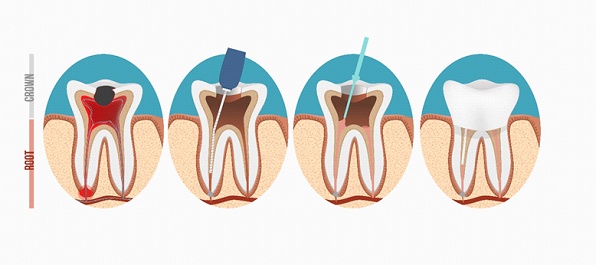
The term “root canal” gets a bad rap, but this procedure is actually painless. In fact, by removing the infected nerve of the tooth, a root canal is designed to relieve pain. Plus, your emergency dentist in Newton will numb your mouth with a local anesthetic beforehand so you will remain comfortable throughout the process.
We will begin by using special instruments to access the inner chambers of the tooth and remove the pulp that’s triggering your pain. After sanitizing the area, we’ll refill it with a synthetic gutta-percha material to retain the tooth’s shape. The next step is to seal and protect the tooth by placing a temporary dental crown. As your mouth heals, the area around the tooth might feel a bit sore and tender.
A few weeks later, we will see you at our dental office. Then, we’ll switch out your temporary crown for a permanent one. At that point, the underlying tooth should be fully protected. You’ll be able to use it as you normally would – bring on that cup of coffee!
The Benefits of Getting a Root Canal

While replacement options like dental implants definitely have their benefits for your smile, preserving your natural tooth should always be the primary goal. If you hesitate to get a root canal when you need one, the infection might progress to the point of no return and your tooth will have to be extracted entirely. Removing and replacing a tooth is a much more complex, time-consuming, and wallet-draining venture than root canal therapy.
In addition to saving your natural tooth, root canal therapy has other benefits:
- Virtually pain-free procedure – Thanks to the advanced dental technology we use, getting a root canal is about as comfortable as the process for an ordinary filling.
- High success rate – The vast majority of root canal patients retain their treated tooth for decades, if not the rest of their lives.
- Aesthetically pleasing results – After your root canal, your tooth will be restored with a custom-made dental crown that seamlessly blends in with the rest of your smile.
Understanding the Cost of Root Canals

Root canal treatment can save your tooth from being extracted. However, you may have concerns regarding the cost of your treatment, so we’re here to help. During your visit with us, we are more than happy to discuss the details and exact cost of your treatment. Until then, here are some things for you to keep in mind.



Root Canal FAQs
Can I Take Antibiotics Instead of Getting a Root Canal?
Unfortunately, the answer to this question is “no.” While they can treat infections in other body parts, antibiotics don’t work on infected teeth.
You see, antibiotics travel through the bloodstream to target infected tissue. However, that stream doesn’t reach a tooth’s inner area – its pulp. As such, an antibiotic couldn’t eliminate the infection in that area.
Ultimately, root canal therapy is the only way to treat infected tooth pulp. Your infection could spread otherwise, even leading to your tooth needing an extraction.
What Happens If You Wait Too Long for a Root Canal?
Left alone, an untreated tooth infection will steadily get worse. That’s only natural – teeth don’t have the power to heal themselves.
At first, this decline may lead to the end of your toothache. You might think, then, that you no longer need a root canal. However, your infection has likely destroyed the tooth’s nerves at that point. Its pain is gone, in other words, because it’s basically dead.
Worse yet, delaying a root canal gives an infection time to spread. If it reaches other body parts, it could then cause systemic illnesses. The tooth may even need extraction in that case.
>Do Root Canals Ever Have to Be Redone?
True, root canal therapy does have a high success rate. That said, it does need to be redone in some rare cases.
Also known as endodontic retreatment, redoing a root canal can be necessary for various reasons. One is that saliva contaminated the treated tooth during the initial procedure. Another, meanwhile, is a delay between the original root canal and crown placement. It’s even possible the tooth had more root canals than expected, meaning the dentist didn’t disinfect them all.
At the same time, even successful root canals need an occasional redo. New decay or crown damage may have occurred, allowing bacteria to reinfect the tooth’s inner layers.
How Much Pain Is Normal After a Root Canal?
A root canal itself shouldn’t hurt, but you’ll likely face discomfort and soreness afterward. Thankfully, though, these symptoms are normal.
Often enough, patients feel mild pain and sensitivity when the treatment’s anesthetic wears off. These aches are easy to handle, however, with over-the-counter pain relievers. Plus, you can keep from aggravating them by not chewing hard foods. The pain will then start to subside after three days or so.
Call your dentist immediately if your post-therapy pain persists for a week or more. You may be facing a treatment complication.
How long is root canal recovery?
Many patients want to know how long it takes to heal after getting a root canal so they can plan accordingly. Although the answer can vary depending on your unique circumstances, it’s often possible to return to your usual activities, like work or school, the day after your procedure.
You can expect your mouth to feel sore for several days, and if your job involves physical, manual labor, our team might recommend taking a few days off to recover. You can usually brush and floss as usual, but you will want to be gentle around your treated tooth. If you experience persistent pain or notice other signs of infection, like chills or fever, please contact our Newton office as soon as possible so we can ensure you’re healing as intended.
Can I eat before my procedure?
Are you wondering if it’s safe or acceptable to eat prior to having a root canal? In some cases, it’s suggested that patients wait to eat to avoid potential nausea caused by the medication used during the procedure.
However, in many instances it’s recommended that you eat a wholesome meal a couple of hours before arriving at our office. This helps prevent hunger immediately after your treatment, when your mouth is still likely numb from the local anesthetic. Injuries, such as burns or cuts, can occur if you eat when you can’t fully feel your mouth or the temperature of the foods or drinks you’re consuming.
How long will my treatment take?
If you’re worried that your treatment will inevitably be long and grueling, you can thankfully set your fears aside. This service can often be completed in a single appointment, although in certain circumstances, two separate visits may be required.
The length of the procedures themselves can vary based on your dental condition, where the tooth is located in your mouth, and other factors unique to your circumstances. But most people can safely anticipate their appointment will take anywhere from 30 to 90 minutes.
How can I avoid needing a root canal?
It’s only natural to want to avoid potential complex procedures, like root canals. The best way to safeguard your smile is with consistent, routine maintenance. For instance, brushing and flossing twice daily removes plaque and bacteria that might otherwise penetrate the roots and trigger an infection.
You can also prevent oral issues by scheduling a standard checkup and cleaning with our team every six months. This allows us to monitor your condition so we can catch and treat any areas of concern before they lead to problems requiring a root canal.
